Paris Map
Did you know?
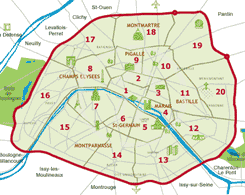
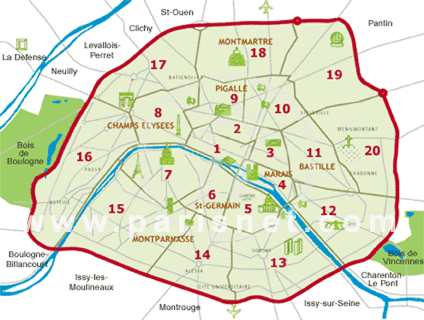
The Paris map shows the 20 different neighborhoods which are called arrondissements. In Paris arrondissements are named according to their number, which corresponds to an administrative district. For example, you might live in the 5th arrondissement, which would be written as 5ème (or 5e) in French. Looking at the Paris Map you can see that the districts spiral out from the center in numerical order. If you know the postal code of any address in Paris, you can easily identify which arrondissement it is located in because Parisian postal codes take the form of - 75XXX - with the last two digits being equal to the arrondissement (e.g. 75008 is the postal code for the 8th arrondissement). The suburbs are called the banlieues. The areas to the west of the city (Neuilly, Boulogne, Saint Cloud, Levallois, Versailles) are the most desirable and they are generally more peaceful than the city. Each of the Paris neighborhoods and arrondissements has its own special character which we'll try to describe below.
Which Paris Neighborhood is Best for You?
It's impossible to generalize each neighborhood, but the following should give you a broad description of the differences between the Paris neighborhoods and make it easier to get oriented on the Paris map. Also check out videos of the most scenic arrondissements and make hotel bookings for each Paris neighborhood.
1er - Louvre, Palais Royale
Book a Hotel in the 1er »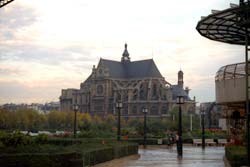 This is the geographical center of Paris and a haven for tourists. The Louvre, The Mus√©e d'Orsay and the Palais Royale are all here.
This is the geographical center of Paris and a haven for tourists. The Louvre, The Musée d'Orsay and the Palais Royale are all here.
2ème - Bourse
Book a Hotel in the 2e »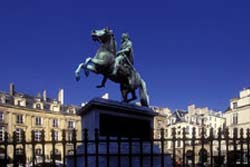 A primarily business district with some cosy side streets and neighborhood restaurants and bars. The rue de Montorgueil is a lively pedestrian street with restaurants, cafes and shops. The Paris Stock Market was located here in the Palais Brongniart before it closed, and the Place des Victoires is a favorite destination for shopping in trendy boutiques.
3ème - Marais, Picasso Museum
Book a Hotel in the 3e »
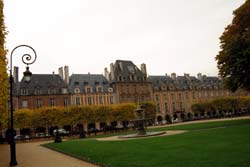 The heart of the Marais is a lively neighborhood with lots of trendy bars and restaurants and it's also known as the center of Gay nightlife. The rue des Rosiers is a centerpiece of Jewish lifestyle in Paris and the Ile St. Louis and the
Ile de la Cité are the oldest parts of Paris.
The heart of the Marais is a lively neighborhood with lots of trendy bars and restaurants and it's also known as the center of Gay nightlife. The rue des Rosiers is a centerpiece of Jewish lifestyle in Paris and the Ile St. Louis and the
Ile de la Cité are the oldest parts of Paris.
5ème - Latin Quarter
Book a Hotel in the 5e »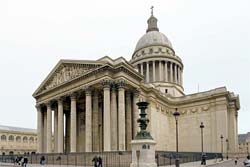 This fabled neighborhood takes its name from the Sorbonne,
where Latin was the common tongue for all students during the
Middle Ages. The neighborhood has the feel of a small village
and students mix freely with professionals in its winding streets.
The rue Mouffetard is a primary artery where shops, international
restaurants and student bars and cafés are found.
This fabled neighborhood takes its name from the Sorbonne,
where Latin was the common tongue for all students during the
Middle Ages. The neighborhood has the feel of a small village
and students mix freely with professionals in its winding streets.
The rue Mouffetard is a primary artery where shops, international
restaurants and student bars and cafés are found.
6ème - Saint Germain
Book a Hotel in the 6e »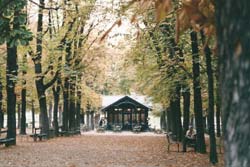 Once the hangout for bohemians and intellectuals, this district
has undergone gentrification and is now one of the most expensive neighborhoods in Paris. While it's also home to trendy boutiques, art galleries, and restaurants this neighborhood is losing its edge to the Marais and other districts that attract a younger up and coming crowd.
Once the hangout for bohemians and intellectuals, this district
has undergone gentrification and is now one of the most expensive neighborhoods in Paris. While it's also home to trendy boutiques, art galleries, and restaurants this neighborhood is losing its edge to the Marais and other districts that attract a younger up and coming crowd.
7ème - Eiffel Tower
Book a Hotel in the 7e »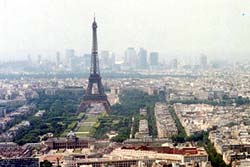 The Eiffel Tower, the Musée d'Orsay, the Rodin Museum and the market street, Rue Cler can be found here.
This very wealthy district is also known for being the home of foreign embassies and many international residents.
The Eiffel Tower, the Musée d'Orsay, the Rodin Museum and the market street, Rue Cler can be found here.
This very wealthy district is also known for being the home of foreign embassies and many international residents.
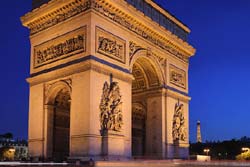 This neighborhood is in fact quite diverse. The area around the famous Avenue des Champs-Elysées has lots of shopping and lots of tourists, while
in the area to the East, between the Champs-Elysees and Place
de la Madeleine, you'll find a mixture of 19th-century residential buildings
intermingled with businesses. This area is in many ways similar
to parts of the 16th, but is generally less pretentious.
This neighborhood is in fact quite diverse. The area around the famous Avenue des Champs-Elysées has lots of shopping and lots of tourists, while
in the area to the East, between the Champs-Elysees and Place
de la Madeleine, you'll find a mixture of 19th-century residential buildings
intermingled with businesses. This area is in many ways similar
to parts of the 16th, but is generally less pretentious.
9ème - Opéra, Pigalle
Book a Hotel in the 9e »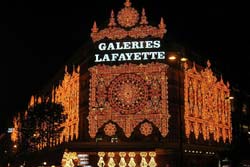 A diverse residential area popular among an artistic crowd. This Southern portion is similar to the 2nd arrondissement, with a mix of residential and business buildings. The Paris Opera is located here as well as Les Grands Magasins (Galeries Lafayette and Printemps). Further North is Pigalle, home of the famous Moulin Rouge and the former Red Light district.
10ème - Canal St. Martin
Book a Hotel in the 10e »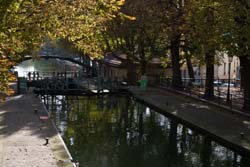 This lively and young district is the home of the two biggest train stations in Paris, the Gare de l'Est and the Gare du Nord. This multi-cultural neighborhood also contains a bohemian element. The cafes and restaurants along the Canal Saint-Martin make it a popular destination for both Parisians and tourists.
11ème - Bastille
Book a Hotel in the 11e »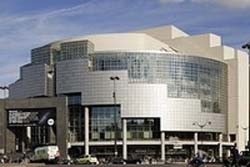 Place de la Bastille and the New Opera are found here. This is a primarily residential district popular among a younger more artsy crowd. It's well known for its nightlife which is centered around the Rue de la Roquette and the Rue Oberkampf.
12ème - Bercy
Book a Hotel in the 12e »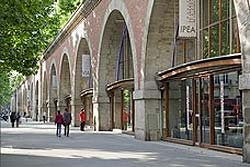 A residential neighborhood bordered on the east by the Bois de Vincennes. The Promenade Plantée, an elevated greenbelt that stretches for almost 3 miles from Place de la Bastille and the indoor arena, Palais Omnisports de Bercy are also located here.
13ème - Place d'Italie
Book a Hotel in the 13e »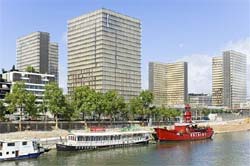 A multi-cultural residential neighborhood which includes Paris' Chinatown and the ultra-modern Bibliothèque François Mitterand. The modernist Place d'Italie is the site of one of the most ambitious French urban renewal projects and the Butte aux Cailles neighborhood with its cobblestone streets and numerous restaurants, cafes and nightlife, preserves a village-like atmosphere within Paris.
14ème - Montparnasse
Book a Hotel in the 14e »15ème - Parc des Expositions
Book a Hotel in the 15e »16ème - Trocadéro
Book a Hotel in the 16e »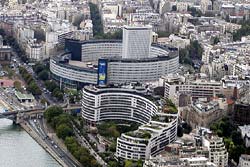 Although it is not as exclusive as the 7th arrondissement, the 16th is widely regarded as the neighborhood for the wealthy. The areas around rue de Passy and Place Victor Hugo offer upscale shopping and the Place de Trocadéro offers a splendid view of the Eiffel Tower from its trendy cafes.
17ème - Palais de Congrès
Book a Hotel in the 17e »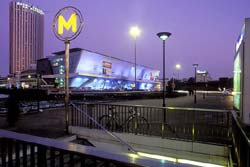 This large and diverse district spans the area from the Arc de Triomphe to Pigalle. The portion in the West, near the Arc de Triomphe and Parc Monceau is very upscale but the residents and prices become more mainstream as you get closer to Place de Clichy.
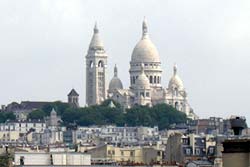 This large neighborhood has an artsy residential vibe as you approach the top of a high hill overlooking Paris. The view across Paris from the Sacré Coeur church is breathtaking and the nearby Place du Tertre is a popular tourist destination. Farther down the hill as you approach the Porte de Clignancourt the neighborhood becomes cheaper and is populated by a mix of recent Paris arrivals and working class residents.
19ème - Parc de la Villette
Book a Hotel in the 19e »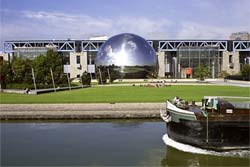 The Parc des Buttes Chaumont. A residential neighborhood with many ethnic restaurants and shops. Parc de la Villette is located here with its Cité des Sciences et de l'Industrie museum and cultural center.
20ème - Belleville, Père Lachaise
Book a Hotel in the 20e »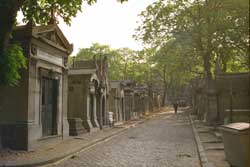 Belleville, Ménilmontant and the Père-Lachaise cemetery. Although traditionally working class, this outlying residential
area is slowly becoming yuppified due to its affordable prices and its popularity among artists and creative types. Ethnic shops, culture and restaurants abound.
Belleville, Ménilmontant and the Père-Lachaise cemetery. Although traditionally working class, this outlying residential
area is slowly becoming yuppified due to its affordable prices and its popularity among artists and creative types. Ethnic shops, culture and restaurants abound.