The Paris Metro and RER
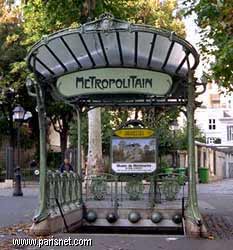 A leading tourist attraction in its own right, using the Paris Metro system is a wonderful way to visit Paris. The first line of the underground subway system (still called Line 1) began operation in 1900 and today the Paris Metro has grown to include 14 lines that connect Paris via its subterranean tunnels. With over 300 stations, it's easy to travel anywhere within the city limits and in so doing, avoid taxis, busses and street traffic. Airports Charles de Gaulle and Orly, as well as many suburban city centers, are accessible by the RER (the Regional Light rail system that shares stations with the Metro).
Overview
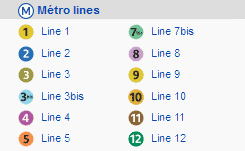
Paris Metro lines are identified by numbers: Lines 1 - 14 run primarily within the city limits. RER lines are identified by letters: Lines A, B, and C run from the city center to the suburbs and the Paris airports. When you enter the Metro, you must choose which direction you will travel. The direction of the train is indicated by the name of the station at the end of the line in the direction that you will travel (e.g. If somebody tells you, "take Line 1, direction Porte d'Orléans", it means you will go South on Line 1). The Paris regional transportation system (RATP) is divided into six zones. For most tourists or infrequent visitors to Paris, as long as you limit yourself to the Metro, you'll only need to worry about Zones 1 and 2. A standard tariff ticket (T+) allows you to travel on any metro or RER line inside the city limits (any Metro station and/or RER stations in Zone 1). Travelling outside the city on the RER, requires a more expensive ticket. Free maps are available from the ticket counter in every station.
Stations within the city limits are inside zones 1-2. Going outside of the city (e.g. Travelling to Versailles on RER C - Zone 4, or travelling to Airport Charles de Gaulle - Zone 5) requires a more expensive ticket.
Using the Metro
Operating Hours
Metro trains depart from the end of the line at the times listed below:
- Mon - Fri: 05:30 - 00:30
- Sat - Sun: 05:30 - 02:15
- Nights before holidays: 05:30 - 02:15
Prices and Fares
 Paris Metro tickets can be purchased from the ticket counter found in every station. Vending machines are also available but they sometimes don't accept coins; payment by card requires a French credit card with an embedded chip. Tickets can be purchased individually (un billet) or in ten-packs (un carnet de dix). Typically, you will have to insert your ticket into the turnstile in order to gain access to the station. A single ticket costs 1.70€ and allows unlimited travel and transfer within the Metro for up to 90 minutes. You can also make one transfer between Metro and RER (the ticket is valid until you exit a Metro station). The Metro and RER share the same stations, so you don't need to exit the Metro to transfer to the RER. Once once you've passed through one RER turnstile however, your ticket will not allow you to pass a second. Turnstile jumpers beware! Inspectors periodically conduct spot checks of all travellers passing through the metro tunnels. If you're not able to show a valid ticket, you will be fined on the spot. So keep your ticket until you exit the Metro station. Tickets purchased in the Metro can also be used on Paris busses ( a new ticket, not the same ticket that you already used in the metro ). Tickets purchased on busses are not valid in the Metro and they also cost more - 1.90€.
Children under 10 get a 50% discount on all tickets and Children 3 years old or under ride for Free.
Frequent travellers in Paris often find it economical to purchase a Paris Metro pass. Riding the Metro is cheaper with a pass and passes are available for different durations; including day passes, weekly passes, and monthly passes. For durations of longer than one month you can buy a Navigo Pass.
Tip: Some smaller stations only have one ticket counter at one end of the station, so if you don't see one, you'll need to exit the station back to the street and enter the metro again from the entrance at the other end of the station. You can avoid this situation by purchasing a carnet or a metro pass.

Paris Metro Fares
10-pack: 14.50€
3 day pass: 25.85€
5 day pass: 37.25€